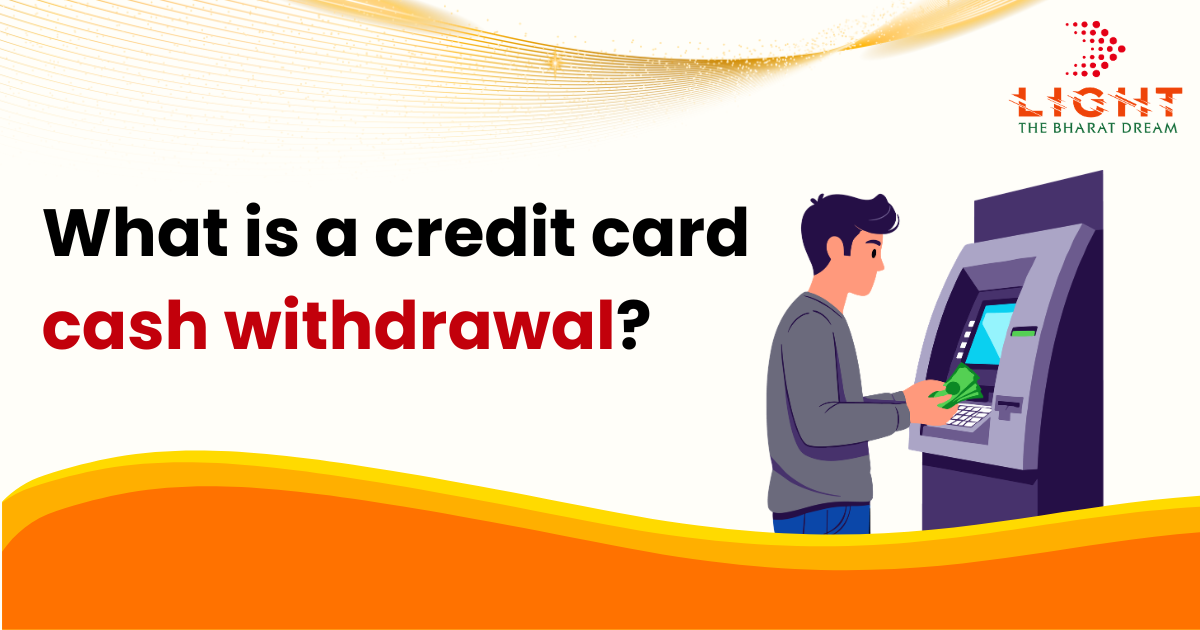
What is a credit card cash withdrawal?
Cash may feel outdated, but in reality, it’s still widely used, especially in small shops, emergencies, or rural areas. Even in cities, situations like server issues, QR failures, or urgent payments can force you to look for physical cash. This is where many users suddenly remember: “Can I withdraw cash using my credit card?” The answer is yes, but most people don’t fully understand the cost and consequences. That’s why this guide doesn’t just explain the basics. It helps you:
- Avoid hidden charges
- Understand real-life usage
- Make smarter financial decisions
What is a Credit Card Cash Withdrawal?
A credit card cash withdrawal is often misunderstood as just another feature, but it’s actually one of the most expensive ways to borrow money.
Key things most users don’t know:
- It is treated differently from normal transactions
- It does NOT come with rewards or cashback
- It starts costing you money immediately
Types of cash withdrawals:
- ATM withdrawals
- Over-the-counter (bank branch) withdrawals
- Cash-like transactions (in some cases, wallets or transfers)
Important: Even if it feels like a small amount, the cost structure is aggressive, which is why banks don’t promote it heavily.
How Does Credit Card Cash Withdrawal Work?
While the process looks simple, there are a few hidden technical aspects:
Behind the scenes:
- The bank records it as a cash advance transaction
- A separate interest calculation begins immediately
- It is tracked differently in your billing statement
Additional things to know:
- Some ATMs may limit the per-day withdrawal amount
- International withdrawals include currency conversion fees
- Failed transactions may still temporarily block your limit
Tip: Always keep your PIN secure. Credit card fraud in ATM withdrawals is harder to reverse than online fraud.
Credit Card Cash Withdrawal Limit
Factors affecting your limit:
- Your credit history
- Repayment behavior
- Income level
- Bank policies
Dynamic adjustments:
- Banks may increase your limit over time
- Or reduce it if they see risky behavior
Also note:
- Your available cash limit reduces immediately after a withdrawal
- Repayment restores your limit, but not instantly in some cases
Tip: Keep your credit utilization low, even for cash withdrawals, to maintain a healthy credit profile.
Fees You Should Know
Let’s break this down more clearly so users don’t get surprised later.
Hidden cost layers:
- Transaction Fee
- Charged instantly
- Added to your bill
- Daily Interest Calculation
- Calculated on the outstanding amount
- Compounded if unpaid
- Billing Cycle Impact
- Even if you pay the full bill later, interest remains
- Penalty Charges
- If you miss a payment – late fee + extra interest
Real impact:
A ₹10,000 withdrawal can easily cost ₹500-₹1,500 extra, depending on repayment timing. This is why financial experts consider it a last-resort option.
Interest Rates Explained
1. Daily Interest Formula
Many people assume that interest is calculated monthly, but that’s not the case. Credit card interest is actually calculated daily. Here’s how it works in simple terms: the annual interest rate (APR) is divided by 365 days to get the daily rate. This daily rate is then applied to your outstanding balance every single day until you repay it. So even if the rate looks small on a daily level, it keeps adding up continuously, which can make your total payable amount grow faster than expected.
2. Compounding Effect
Now comes the part that makes interest even more expensive, compounding. If you don’t pay off your dues in full, the interest charged gets added to your original amount (principal). From the next day onward, interest is calculated on this new, higher amount. In simple words, you start paying interest on your interest. Over time, this creates a snowball effect where your debt keeps increasing, even if you’re not making new transactions.
3. Key Mistake Users Make
One of the most common mistakes people make is paying only the minimum amount due shown on the credit card bill. While this avoids late payment penalties, it does not stop interest from being charged. The remaining balance continues to attract daily interest, which keeps increasing your total debt. This is why many users feel stuck in a cycle where they keep paying every month, but their outstanding amount doesn’t reduce significantly. To avoid this, it’s always better to pay the full amount whenever possible, especially when it comes to cash withdrawals, which usually start accruing interest immediately.
When Should You Use Credit Card Cash Withdrawal?
Apart from emergencies, there are a few rare practical scenarios:
- When traveling to places with limited digital access
- During bank server downtime
- In urgent situations, late at night, when no other option exists
But always ask yourself:
- Is this truly urgent?
- Do I have a cheaper alternative?
If the answer is yes, avoid withdrawal.
When Should You Avoid It?
Let’s make this more relatable:
Avoid in situations like:
- Taking cash for shopping malls or restaurants
- Withdrawing cash just for convenience
- Using it to repay another loan (bad cycle)
- Funding lifestyle upgrades
This behavior often leads to a debt trap cycle, especially for new credit card users.
Advice to Use It Wisely
Take this a step further with expert-level tips:
- Always check your interest rate per month
- Set payment reminders to avoid late fees
- Avoid withdrawing near your billing date
- Monitor transactions via your bank app regularly
- If possible, prepay immediately after withdrawal
Smart users treat this feature as a backup tool, not a habit.
Conclusion
A credit card cash withdrawal can be a helpful option when you urgently need cash and have no other means of obtaining it. However, it is essential to recognize that this convenience comes at a high cost. Because of the immediate interest and multiple charges, it should only be used in genuine emergencies. The smarter approach is to explore other options first and rely on this feature only when necessary. Using it wisely and repaying quickly will help you avoid unnecessary debt and keep your finances healthy.