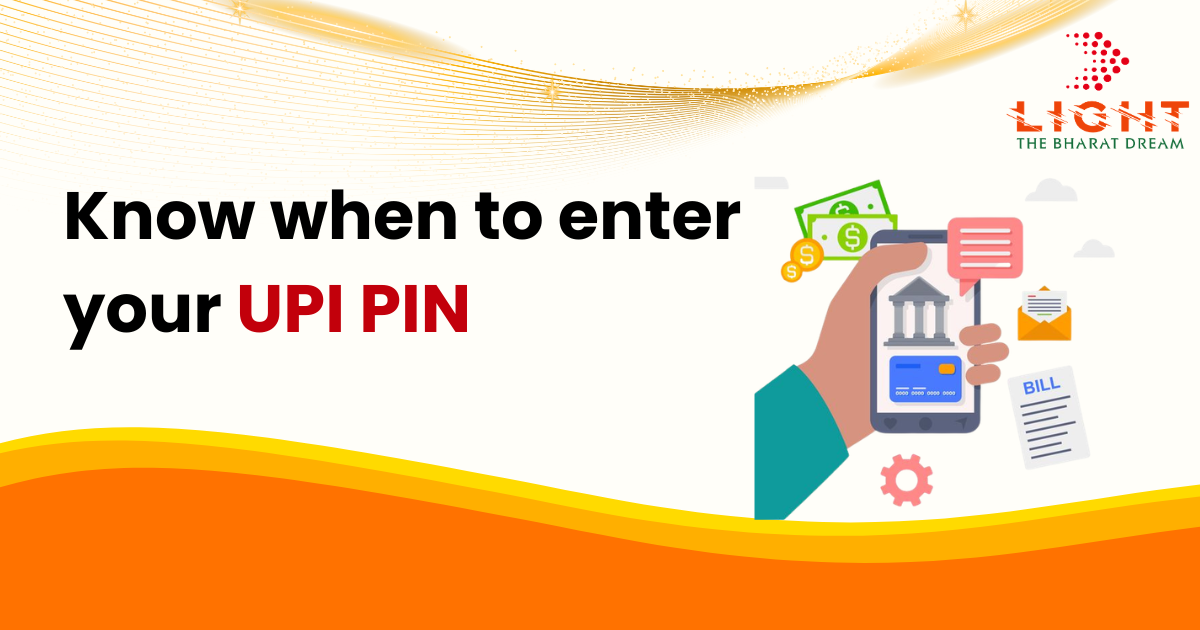
Know when to enter your UPI PIN
The reason for being one of the most popular payment systems is that people can send money from one person to another, instantly, without having to physically go to the bank or use cash. UPI makes it easy and quick for anyone to pay for their food, order something online, buy tickets, or split costs with friends. Users can send and receive funds with just a smartphone and an internet connection within seconds.
With the continued rise of digital payments, cyber fraud and online scams are also on the rise. The lack of understanding of UPI security is the reason for many losing their money. Fraudsters tend to entice users who do not know how to verify payments and trick them out of their UPI PINs in fake transactions.
What Is a UPI PIN?
UPI PIN is a secret credential that is used to approve a transaction that is done using Unified Payments Interface applications. It serves as a secure authentication process that confirms the identity of the account holder prior to the transfer of money from the bank account.
Every time the user sends money via the UPI application, the system will prompt for the PIN for processing the money transfer. This added security helps to prevent unauthorized payments and safeguards banking information from misuse.
When Should You Enter Your UPI PIN?
1. While Sending Money
For every money transfer to other users through the UPI app, the money transfer system will prompt you with your UPI PIN to verify payment. This step is the last check prior to the money being deducted from your account. If the PIN is not entered correctly, the transaction will not be able to be completed.
Purchasing different things with money for various purposes, like paying rent, splitting bills, sending emergency funds to family members, or making payments to merchants. In each of these situations, the input of the UPI Pin is a statement of consent towards the transfer.
2. During Online Shopping Payments
The UPI is becoming one of the most preferred payment modes due to its ease and speed of use, especially on online shopping platforms. Upon selection of UPI at the time of payment, the customer is then taken to a payment request, and the payment has to be authorised by entering the UPI PIN.
A lot of fake shopping websites are built to resemble the real e-commerce websites. If the user is not paying attention, he/she could order and enter the PIN on a fake payment screen. That is why it is important for users to always check the authenticity of the site before making any payments.
3. While Paying Bills
UPI has made the process of bill payments a lot simpler, where customers can pay bills instantly from their mobile phones. UPI PIN is needed to make a payment securely, for example, when paying your electricity bill, internet bill, gas bill, water bill, or mobile recharges.
The advantage of bill payments through UPI is that it helps users save time and eliminates the hassle of waiting in line or making cash payments. But there are bill payment pages and customer help services that scammers have set up to entice customers to enter their PINs.
4. Adding a New Bank Account or Resetting PIN
When setting up UPI services for the first time, users may need to verify their bank account and create a secure PIN. Similarly, if someone forgets their PIN, the app may ask for authentication before allowing them to reset it. This process usually involves debit card verification and OTP confirmation. Genuine UPI apps guide users through secure verification steps directly within the application.
When You Should NEVER Enter Your UPI PIN
One of the most crucial components of digital payment security is knowing when to avoid entering your UPI PIN. The reason many online scams are effective is that users unwittingly grant permission to scams that request it.
1. To Receive Money
The most common misconception about UPI payments is that people need to enter their PIN to get cash. In fact, there is no PIN required to receive money. This confusion is exploited by fraudsters by sending bogus payment requests and stating that users need to input their PIN to receive payment. After the PIN is entered, the money will be sent from the victim’s account, not received.
2. On Phone Calls or Messages
Often, the criminals claim to be a customer service representative, bank representative, or government official. They can call, send SMS, email, or social media messages to the user, and panic them by alleging that something is wrong with the profile. Scammers may claim that the account will be suspended if it isn’t verified right away. Some provide cashback or a refund as a reward, and request users to disclose their financial information.
3. On Unknown Links or Fake Apps
Fraudsters are often known to send malicious links via messaging apps and emails. These links can take you to fake banking pages that are very similar in appearance to the real banking site. Users who do not suspect that they are dealing with an imposter site can enter their UPI details, thinking they are on a legitimate site. Likewise, there are fake apps that pretend to be legitimate UPI applications and can also steal personal and banking data. Once installed, such apps may gain unauthorized access to sensitive data.
4. During Screen Sharing
Some scammers ask users to install screen-sharing or remote access applications while pretending to help with payment issues. Once the scammer gains screen access, they can observe every action performed on the device, including PIN entry and banking activity.
This type of fraud is becoming increasingly common because many users trust fake support agents without realizing the risks involved. Sharing the screen during banking activities can expose sensitive financial information and compromise account security.
Common UPI Scams You Should Know
Online fraud tactics are constantly evolving, and scammers continue finding new ways to trick users. Understanding these scams can help users identify suspicious behavior early and avoid financial loss.
1. Collect Request Scams
Collect Request Scams involve a payment request, disguised as a money transfer. Users are misled to think that they are being sent money and enter their PIN without taking the time to read the message. What really happens is that the money is released from their account by the PIN. The scams come in when people are transacting online, where they appear to be buyers.
2. QR Code Scams
QR code scams are very prevalent with digital payments. QR codes are employed by fraudsters to deceive users into believing that they should scan the QR code to get money back, cashback, or prize money. Typically, a PIN is entered by scanning the code and allows payment, but doesn’t provide monetary payment. Users should be aware that QR codes are mainly used for payments.
3. Fake Cashback Offers
Often, scammers lure victims to sign up using false offers of rewards and cash back schemes. Users can be sent messages claiming they’ve won a prize or are eligible for special payment bonuses. The fake offers generally include phishing links in them which lead to phishing pages asking for personal information or fake payment pages.
4. KYC Update Scams
KYC-related scams create fear by claiming the user’s account will be suspended if verification is not completed immediately. Fraudsters may ask for debit card details, OTPs, and UPI PINs during the fake verification process. Genuine banks never ask users to share confidential banking credentials over calls or messages.
5. Customer Care Frauds
There are many fake customer service numbers available online. Unsuspecting users might call for help from payment companies only to be connected with fraudsters. These scammers frequently lead the user to enter personal details and/or accept payments they did not authorize. Users are advised to always use official apps and websites for help and assistance.
Conclusion
UPI has revolutionized the digital transaction processes for millions of users, making them quicker, simpler, and easier. But the convenience of payment does not come without its risks, and in particular, one must be vigilant against online fraud. Knowing when to enter your UPI PIN will help save your hard-earned money and prevent any illegal transactions from being made. Users should always keep in mind that the PIN is only needed for authentic payments. Money does not need to be authorized by a PIN to receive.